What happens to Bun in this episode?
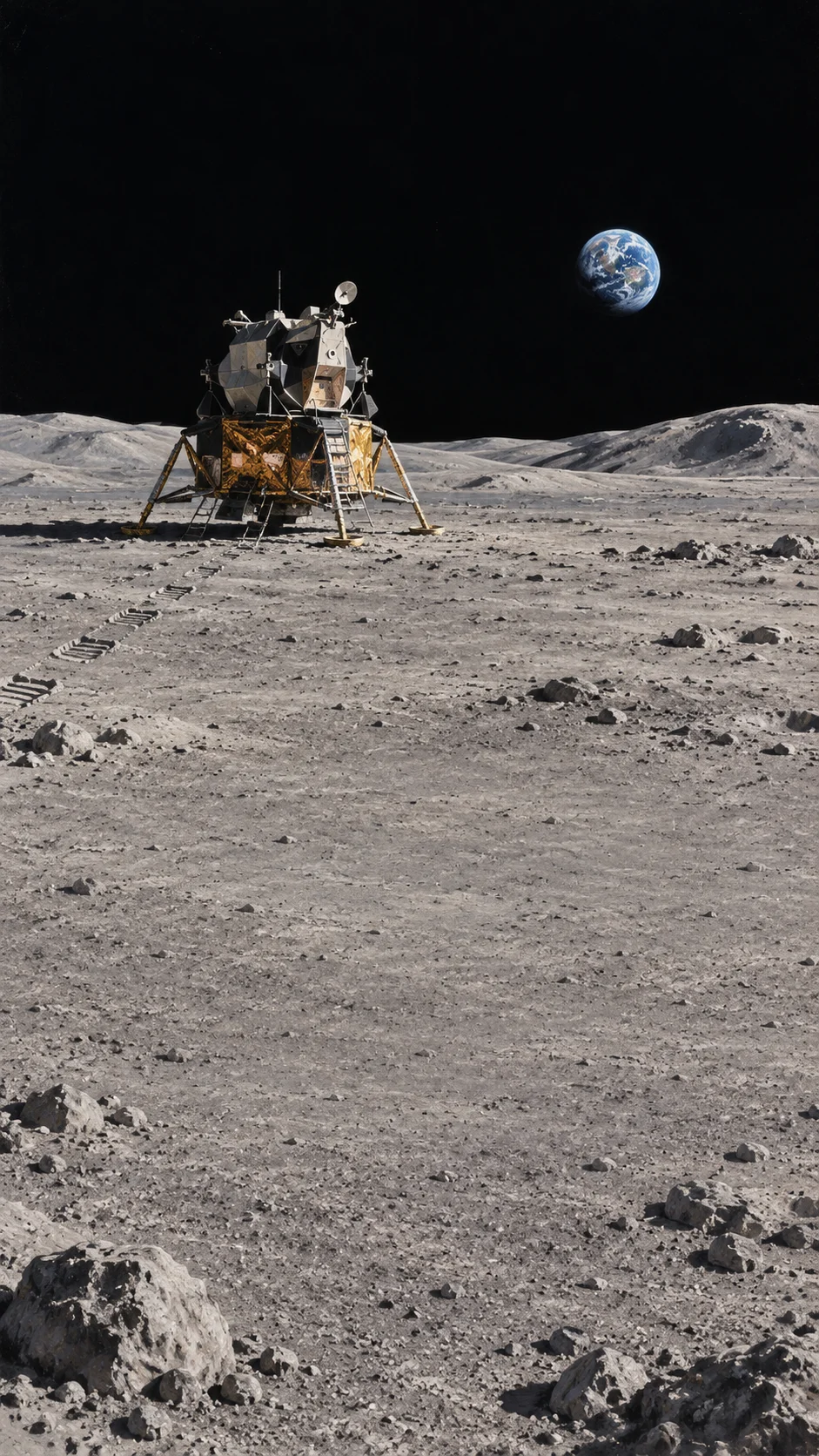
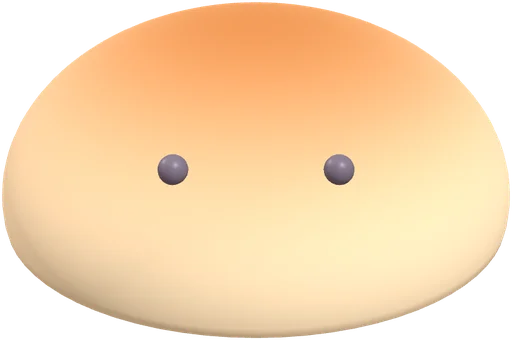
An imagined lander footpad lowers onto Bun, touching its top and pressing it against the gray dust. A contact shadow marks the footpad touching Bun, and a dust contact shadow anchors Bun to the ground. Bun stays flat while the footpad holds it. Only when the footpad lifts does Bun spring back and make a slow hop. This entire squeeze and release is fiction, not a reconstruction of Eagle's landing or liftoff.
When did people first land on the Moon?
Apollo 11's lunar module, Eagle, landed on the Moon on July 20, 1969, with Neil Armstrong and Buzz Aldrin aboard while Michael Collins stayed in orbit.
Why does Bun's hop take longer on the Moon?
The Moon's surface gravity is about one-sixth of Earth's. With the same upward launch speed, a hop would rise higher and take longer to return to the ground. That does not make a squishy recover its shape more slowly: the footpad causes the squeeze, and Bun's spring-back is a fictional CG action.
Can I press and release Bun myself?
You can press, hold and release Bun in the free Daily Squish game. Its CG shape recovers after you let go; the game does not simulate a hop in lunar gravity.
Try Daily Squish Back to the series